
Expert Tips for How to Install Concrete Walkway
Installing a concrete walkway is a practical way to enhance your outdoor space, providing a durable and attractive path that can withstand the elements. Whether you want to improve your garden, create a safe path to your front door, or add value to your property, knowing how to install a concrete walkway correctly is essential. This guide offers expert tips to help you achieve a professional finish, even if you are a beginner.
How to Install Concrete Walkway: Step-by-Step Guide
Installing a concrete walkway involves several key steps, from planning and preparation to finishing touches. Here’s a detailed breakdown to help you get started:
1. Plan Your Walkway Layout
Start by deciding the exact path your walkway will take. Use stakes and string to mark the edges of the walkway. This will help you visualize the space and ensure the path is straight or follows the desired curve.
Measure the length and width of the walkway.
Consider the thickness of the concrete slab, typically 4 to 6 inches.
Check for any underground utilities before digging.
2. Excavate the Area
Remove grass, soil, and debris from the marked area to a depth of about 6 to 8 inches. This allows room for the base material and concrete slab.
Use a shovel or a rented excavator for larger projects.
Ensure the base is level and compacted to prevent settling.
3. Prepare the Base
A solid base is crucial for durability. Lay down a 4-inch layer of crushed stone or gravel and compact it thoroughly.
Use a plate compactor or hand tamper.
This base helps with drainage and prevents cracking.
4. Build the Formwork
Construct wooden forms along the edges of the walkway to hold the concrete in place.
Use 2x4 or 2x6 lumber depending on the thickness.
Secure the forms with stakes and ensure they are level.
5. Mix and Pour Concrete
Mix the concrete according to the manufacturer’s instructions or order ready-mix concrete for larger projects.
Pour the concrete evenly within the forms.
Use a shovel or rake to spread it out.
6. Level and Smooth the Surface
Use a screed board to level the concrete by moving it back and forth across the forms.
Follow with a bull float to smooth the surface.
For a non-slip finish, use a broom to create texture once the concrete starts to set.
7. Cure the Concrete
Proper curing is essential for strength and durability.
Cover the walkway with plastic sheeting or wet burlap.
Keep it moist for at least 7 days.
8. Remove Forms and Finish Edges
After curing, remove the wooden forms carefully.
Use an edging tool to smooth the edges.
Fill any gaps with soil or mulch.
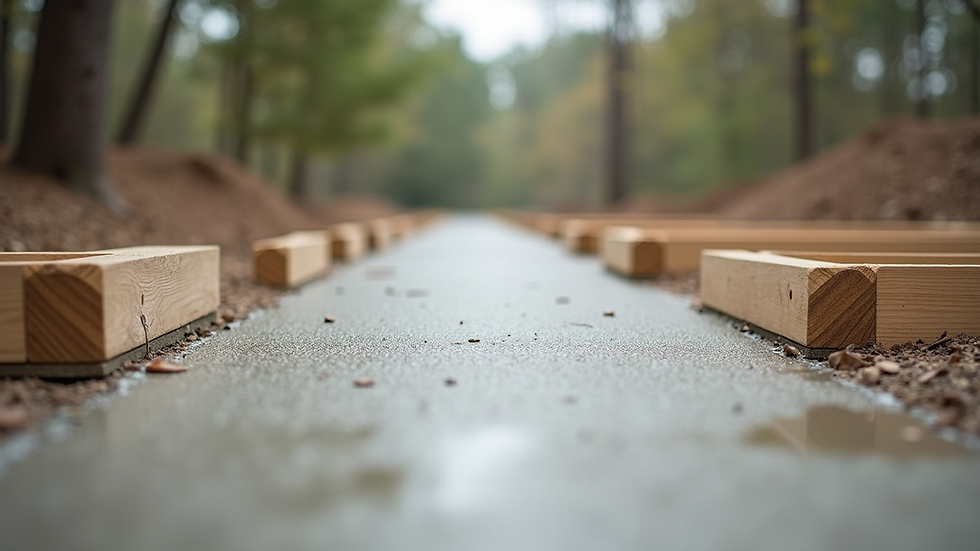
Concrete being poured and leveled within wooden forms
Essential Tools and Materials for a Successful Concrete Walkway Installation
Having the right tools and materials makes the project easier and ensures a professional result. Here’s what you’ll need:
Tools:
- Shovel and rake
- Wheelbarrow
- Plate compactor or hand tamper
- Wooden stakes and string
- Level and measuring tape
- Screed board and bull float
- Edging tool and broom
Materials:
- Concrete mix or ready-mix concrete
- Crushed stone or gravel for base
- Wooden boards for formwork
- Plastic sheeting or burlap for curing
Using quality materials and tools will help your walkway last for years without cracking or shifting.
How much does it cost to have a 20x20 concrete slab poured?
Understanding the cost of concrete work helps you budget effectively. For a 20x20-foot concrete slab, prices vary depending on location, materials, and labor.
Material costs: Concrete typically costs between $100 and $150 per cubic yard. For a 4-inch thick slab, you’ll need about 4.4 cubic yards.
Labor costs: Professional installation can range from $2 to $6 per square foot.
Additional costs: Excavation, base materials, and finishing may add to the total.
On average, expect to pay between $1,500 and $3,000 for a 20x20 concrete slab poured by professionals. DIY projects can reduce labor costs but require time and effort.

Concrete slab being smoothed with a bull float during installation
Tips for Preventing Common Concrete Walkway Problems
Concrete walkways can develop issues like cracking, settling, or discoloration if not installed properly. Here are expert tips to avoid these problems:
Proper base preparation: Ensure the base is well-compacted and level to prevent settling.
Control joints: Cut control joints every 4 to 6 feet to allow for expansion and contraction.
Avoid overwatering: Too much water in the mix weakens the concrete.
Cure properly: Keep the concrete moist during curing to prevent cracks.
Seal the surface: Apply a concrete sealer to protect against stains and weather damage.
Following these tips will extend the life of your walkway and keep it looking great.
Enhancing Your Walkway with Decorative Finishes
Concrete walkways don’t have to be plain. You can add style and personality with various decorative finishes:
Stamped concrete: Create patterns that mimic stone, brick, or tile.
Colored concrete: Add pigments to the mix for vibrant or subtle hues.
Exposed aggregate: Remove the top layer to reveal decorative stones.
Borders and inlays: Use different colors or materials to frame the walkway.
These options allow you to customize your walkway to match your home’s style and landscape.
Final Thoughts on Installing a Concrete Walkway
Installing a concrete walkway is a rewarding project that improves your outdoor space’s functionality and curb appeal. By following these expert tips and carefully planning each step, you can achieve a durable and attractive walkway. Remember to prepare the base well, use the right tools, and allow proper curing time. Whether you choose a simple finish or a decorative design, your new walkway will provide years of reliable service.
For those looking to ensure a flawless project, professional concrete walkway installation services are available to handle everything from excavation to finishing. This option can save time and guarantee expert results.
With the right approach, your concrete walkway will be a beautiful and practical addition to your property.


Comments